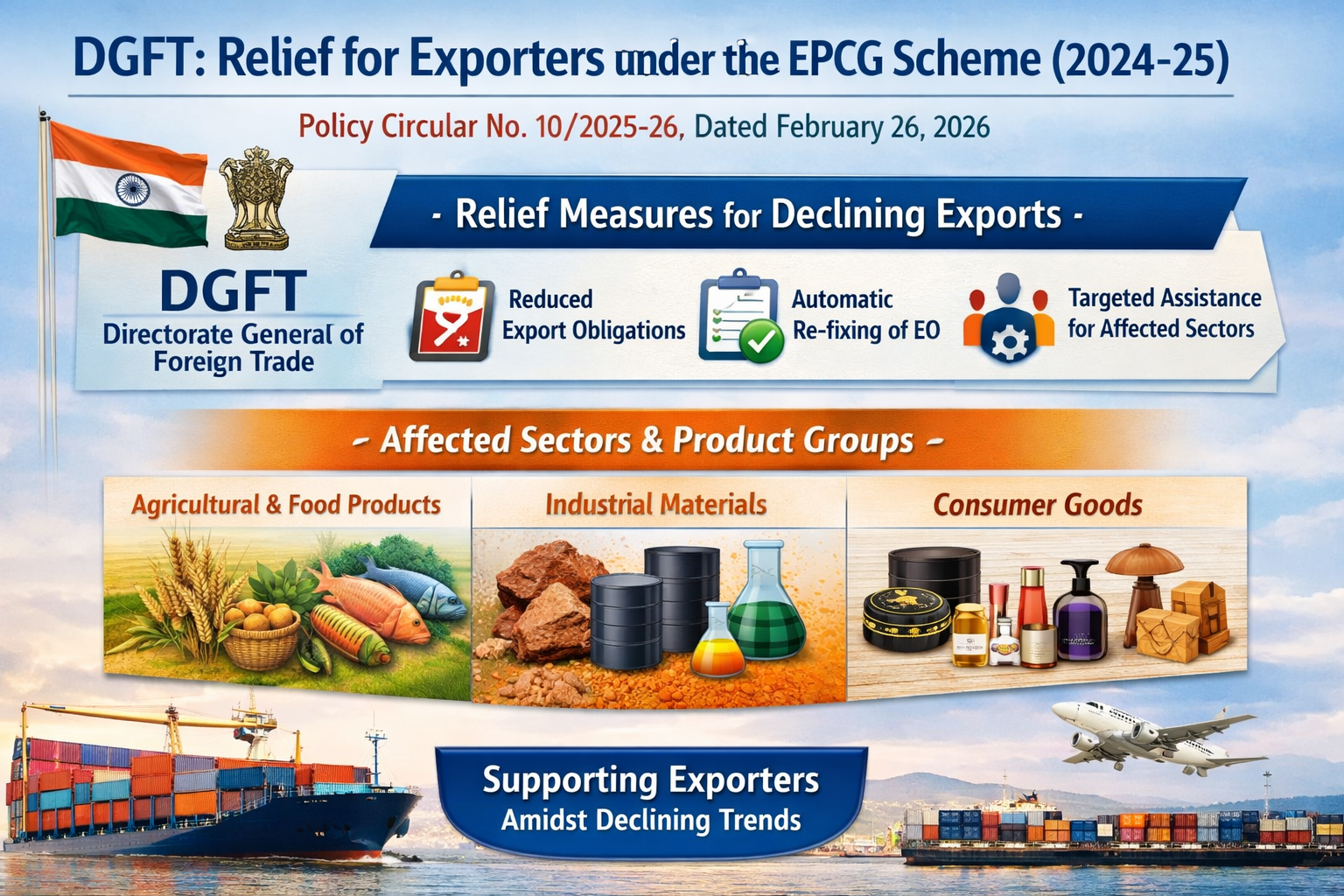
DGFT: Relief for Exporters under the EPCG Scheme
DGFT: Relief for Exporters under the EPCG Scheme (2024-25) The Government of India, through the Directorate General of Foreign Trade (DGFT), has issued Policy Circular
New Delhi, February 13, 2025 – The government today introduced the Income Tax Bill 2025, in the Lok Sabha, aiming to bring significant changes to the existing tax framework. Finance Minister Nirmala Sitharaman presented the bill, emphasizing the government’s commitment to simplifying the tax system and promoting economic growth.
The Bill aims to simplify the tax system for all and is built on these core “SIMPLE” principles:
In new Income Tax Act, Under Section 4 of the Income Tax Act, 1961, income tax was levied for a financial year based on the rates set in the Finance Act for the corresponding assessment year. However, Clause 4 of the Income Tax Bill, 2025, proposes replacing this structure with a unified “tax year,” merging the financial year and assessment year into a single period. This reform is intended to streamline tax compliance, eliminate ambiguities in return filing, and bring India’s tax system in line with global best practices.
The traditional five categories of income—Salaries, House Property, Business/Profession, Capital Gains, and Other Sources—remain unchanged in the new bill. However, Clauses 13 to 59 broaden these classifications by specifically incorporating earnings from virtual assets, digital businesses, and online income. These updates aim to modernize the tax framework, ensuring that emerging revenue streams are appropriately recognized and regulated under tax laws.
You can view the new Income Tax Bill using the link provided below.

DGFT: Relief for Exporters under the EPCG Scheme (2024-25) The Government of India, through the Directorate General of Foreign Trade (DGFT), has issued Policy Circular
GST Proceedings Post-Cancellation Cannot Be Sustained Where Notice Is Served Solely Through GST Portal – Violation of Section 169 and Natural Justice Opening Summary In
GST Recovery: Karnataka High Court Holds Common Directorship Insufficient to Justify Lifting Corporate Veil for Tax Dues In the case of Ramms India Pvt. Ltd.
WhatsApp us